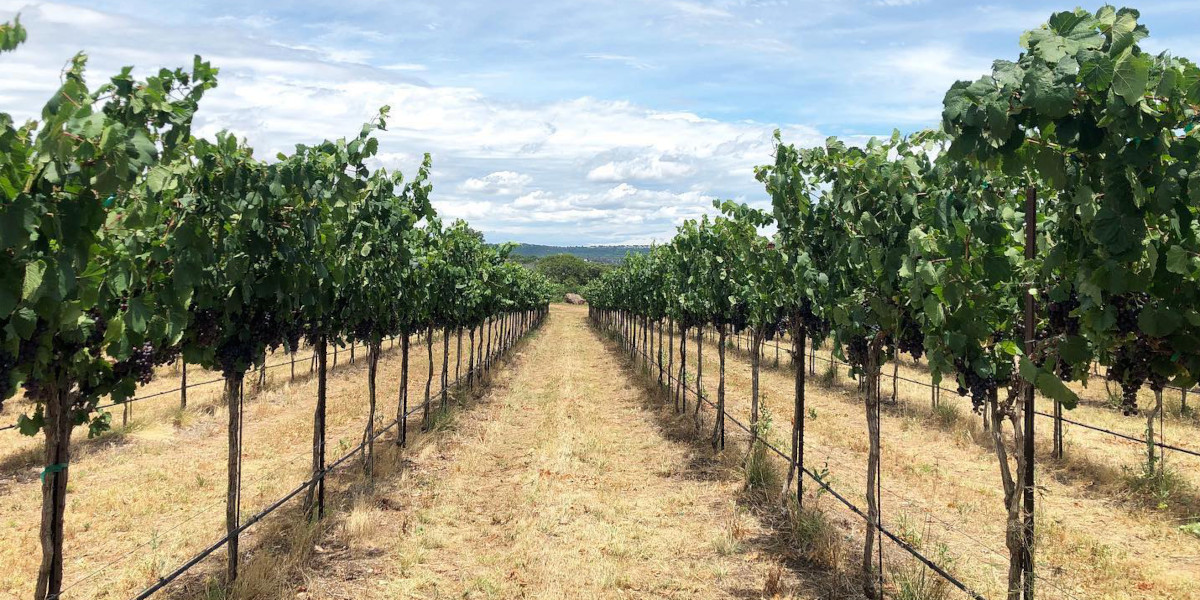


The discussion of climate in Texas is often shorter than it should be because of some belief that Texas’ climate can concisely be defined as ‘hot’. Texas covers ten degrees of latitude and has three major climate classifications, including continental, maritime, and mountainous. In addition, because Texas is incredibly large (as large as the entire country of France) there are significant variations within these larger climate classifications that vary the patterns of precipitation, temperature, and vegetation inherently suited to the growing area. One way that these are categorized is by the ten defined ecoregions of Texas. All of this to say, the weather, sun, temperature, and water patterns that define how a grape grows in Texas has much more variation than can simply be defined as ‘hot.’
The majority of Texas, from the Gulf Coast to over halfway inland North to South, is a modified maritime climate that resembles the impact that a small ocean would have on a region. There are high levels of rainfall, lush green grasslands and forests, and warm temperatures day and night during the growing season. Winters tend to be more mild.
On the contrary, the elevated and semi-arid regions in and directly around the Panhandle have a continental climate that is not moderated by a large body of water, giving the region dryer conditions, warm days, and cool nights. The winters are less mild, and unpredictable weather from year to year causes a variation in the growing conditions for each season.
West Texas is home to the “Little Rockies” and several of the highest elevation points in Texas. The climate here is mountainous, with warm, sunny days and cool nights that are met by moderate to low rainfall and great drainage. There is significant variation in the climate here based on rainfall, slope, and elevation.
Vintage Variation

Every single year where grapes are harvested is significantly defined by the unique weather patterns for that year. There are some wine-growing regions of the world that are known for the wide variation in weather from year to year, and Texas is certainly one. In addition to drought years, heat spikes, powerful storms from along the coast, and high humidity conditions, a massive defining factor that contributes to the extreme weather conditions in Texas is the threat of late Spring frost and hail storms. Several years in the last few decades have been stellar examples for the risk of growing grapes in the unpredictable climate of Texas, including the years 2013, 2014 and 2022. Navigating the extreme weather of Texas is both a challenge and an opportunity to showcase the wild and hardy grapes that this state is capable of producing with thoughtful farmers.
You must be logged in to post a comment.